
Hospitals aren’t all built the same. Architectural design takes a different lens when planning for acute care hospitals vs inpatient rehabilitation hospitals. Acute care is built for speed, efficiency, and constant monitoring. Patients are often in bed, with care coming to them.
Inpatient rehabilitation flips that model. Patients are encouraged to be up, moving, and purposefully engaged for much of the day. That shift changes everything for architectural design. Corridors become part of therapy, supporting safe, repeated movement with features that help track progress. Therapy spaces are central and visible, reinforcing their role in daily routines. Social and dining areas double as places to practice everyday skills like meal prep, laundry, and even grocery shopping. Thoughtful design turns the environment into an active part of recovery, supporting each step toward independence.
From therapy gyms to everyday spaces, here are a few ways architects adapt design for inpatient rehabilitation hospitals.
Flexible Design Supports Evolving Technologies and Care Models
Inpatient rehabilitation spaces are designed to integrate new technologies without letting the technology take over the experience. The focus is on creating adaptable environments that can evolve as therapy tools and care models change over time. Therapy gyms are designed with the right infrastructure, such as power, data, and structural support, while still prioritizing daylight, openness, and a calm, human-centered feel. Ultimately, the goal is for evolving technologies to quietly enhance therapy and coordination, while the environment continues to support comfort, dignity, and patient confidence.
Spaces Designed Around People First Improve Rehabilitation Outcomes
Recovery is physically and mentally demanding. The environment needs to work just as hard to support each patient. Access to natural light plays a meaningful role, helping regulate sleep, improve mood, and reduce pain perception, leading to more productive therapies. Quiet, restorative spaces help patients recharge between therapy sessions. Clear wayfinding reduces stress and builds confidence as patients navigate independently. Hospitality-inspired interiors, including warm materials, ergonomic furnishings, and inviting social areas, create a sense of normalcy during longer inpatient rehabilitation stays.
Patient-centered care was at the heart of the design of Wesley Rehabilitation Center, a 41-bed rehabilitation hospital in Wichita, Kansas. Barge architects worked with the client to prioritize natural light, open spaces, and intuitive wayfinding to create a calming environment. Large windows and strategically placed light pockets enhance brightness throughout the facility, fostering a positive healing atmosphere. Patients are inspired throughout the day in spaces that put them first, leading to better outcomes.
Intentional Circulation Design Promotes Safe Mobility and Confidence
Movement shouldn’t stop when therapy ends. It should be part of the day. Circulation design turns everyday paths into opportunities for progress. Looped corridors and visible destinations encourage independent movement and create a sense of purpose. Graded challenges—such as varied distances, handrails, and intentional rest points—help patients safely build endurance while reducing fatigue and fall risk. Open sightlines support awareness and supervision without feeling intrusive. When the environment invites movement, patients gain confidence and the belief that they can do this.
Outdoor Spaces Promote Healing While Building Strength
Outdoor spaces extend therapy beyond the building, offering patients a setting that feels both restorative and practical.
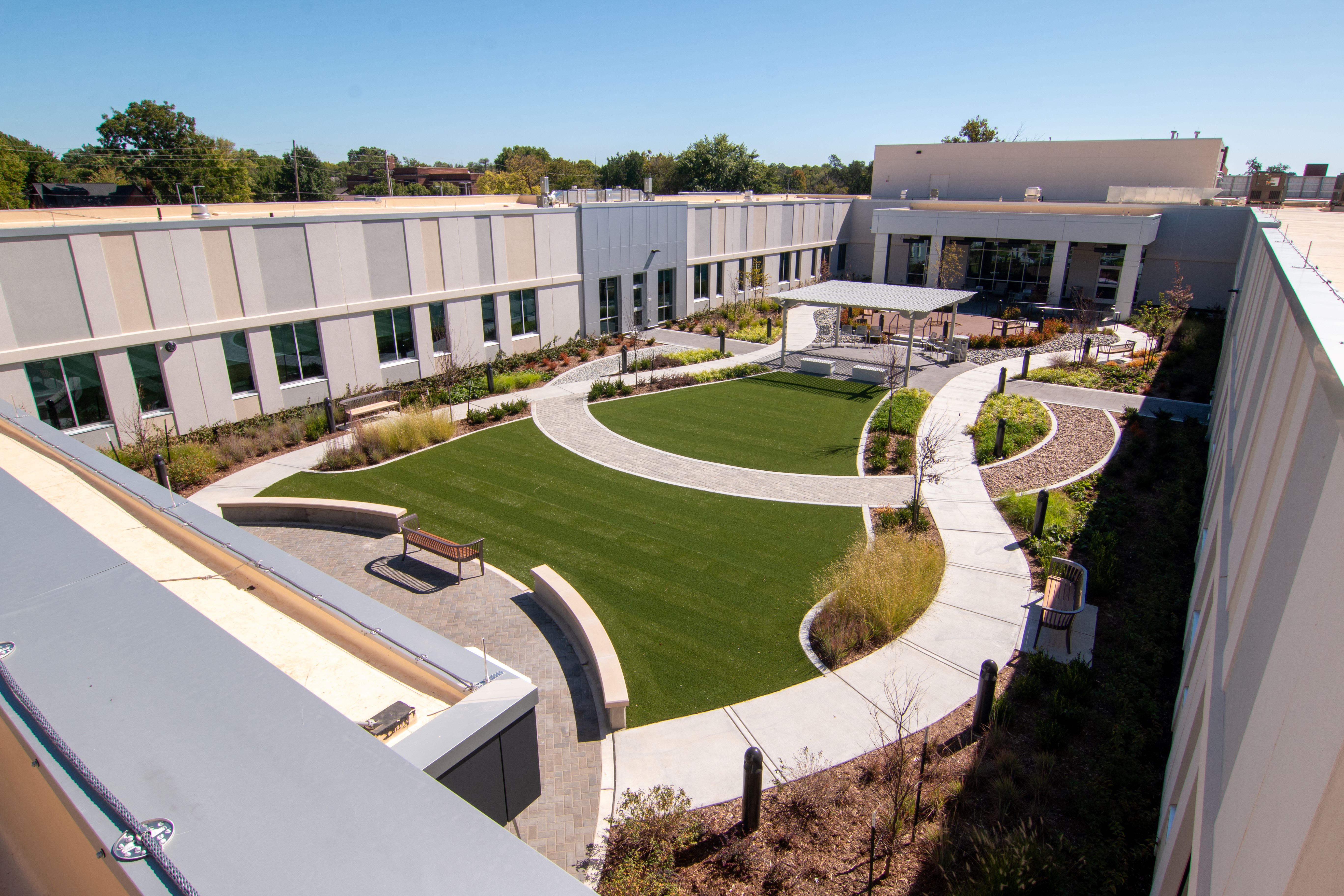
Landscaped areas are designed as real-world environments, where patients can safely practice mobility across varied surfaces, grades, and conditions. These spaces help build endurance and adaptability in ways that indoor settings cannot fully replicate. Just as importantly, they provide a change of pace—an opportunity to step outside, reset, and recharge during the intensity of recovery.
Wesley Rehabilitation Center’s courtyard is an example of how outdoor spaces can be essential to a patient’s successful recovery. Its outdoor courtyard serves as an extension of therapy, offering multiple walking surfaces, steps, and ramps integrated into rehabilitation exercises. Porches, shade, and thoughtfully placed seating areas provide patients a place to pause and prepare from the intense work of recovery.
Designing for inpatient rehabilitation requires a different approach, prioritizing movement, independence, and daily engagement over observation and efficiency. When architectural design aligns with how patients recover, the environment becomes an active part of the recovery process.
To learn more about adapting architectural design for inpatient rehabilitation, connect with our team.


More Posts

Top 5 Skills for Today’s Architecture Graduates
Adapting Architectural Design for Inpatient Rehabilitation Hospitals
.jpg)