
Manufacturing facilities do more than support production—they shape communities by creating jobs, strengthening infrastructure, and encouraging innovation. By introducing new employment opportunities, they help grow local economies and attract future investment. As designers, our role extends beyond supporting our clients to supporting the communities they serve.
To reinforce this positive impact, facilities must meet today’s needs while remaining adaptable for the future. Smart design strategies give clients the flexibility and longevity required for sustained production and community engagement. By understanding a client’s product and its risks, designers can create environments that promote efficient operations and employee well-being.
Here are a few strategies to consider when designing with both the client and community in mind.
Anticipate Client Needs for a More Responsive Design
Smart manufacturing design looks beyond the final product to the entire production process. From raw materials and potential hazards to employee interaction and future expansion, every element deserves careful thought. For speculative buildings with an unknown client, designers should anticipate the needs of multiple industries. That approach begins with site selection.
Select sites that appeal to a wide range of users while accommodating stormwater management, transportation access, and future growth. Designing a 50,000- to 100,000-square-foot facility with 50-foot bays creates flexibility for diverse operations and enables faster occupancy, allowing clients to enter production sooner.
Influence Productivity Through Employee-Focused Design
A company is only as efficient as its employees. In a competitive employee market, the people who occupy the space are a priority. Facility accommodations can influence the quality of and increase employee retention. Smart design inclusions, such as courtyards, exercise rooms, and showers, go beyond employee efficiency by promoting well-being. The space needs to be accessible from a production standpoint, and for the employees the company counts on for success. These items may seem like an unnecessary additional cost to the client, but in manufacturing zones with competitive job markets, they are key to retaining a quality workforce.
Eco-Conscious Design for Clients on a Budget
Many clients want eco-friendly facilities but face budget constraints. Smart design offers sustainable, cost-effective options that protect the client’s return on investment. Motion-activated lighting and plumbing fixtures reduce energy use, while daylighting through windows and skylights limits the need for artificial lighting. Simple strategies—such as shades or a white roof—help regulate interior temperatures. Envelope efficiency can be further improved through thoughtful detailing and thermal design to reduce air leakage. Together, these measures lower energy consumption, benefiting both the environment and the bottom line.
Design for Safety − Design for Longevity
Safety is a core design priority, particularly in industrial facilities. Manufacturing environments present unique risks, making it essential to create clear, designated pathways that keep employees separated from high-hazard areas. When chemicals are involved, controlling emissions is equally important to protect both people and the environment.
Facilities that handle explosive materials require an even higher level of hazard awareness. In Columbia, South Carolina, JJE Ammunition needed warehouse and production space, making it critical to separate explosive-handling areas from the rest of the facility to safeguard people and operations. These safety-focused design decisions support long-term performance and success.
Optimize Workflow to Improve Efficiency
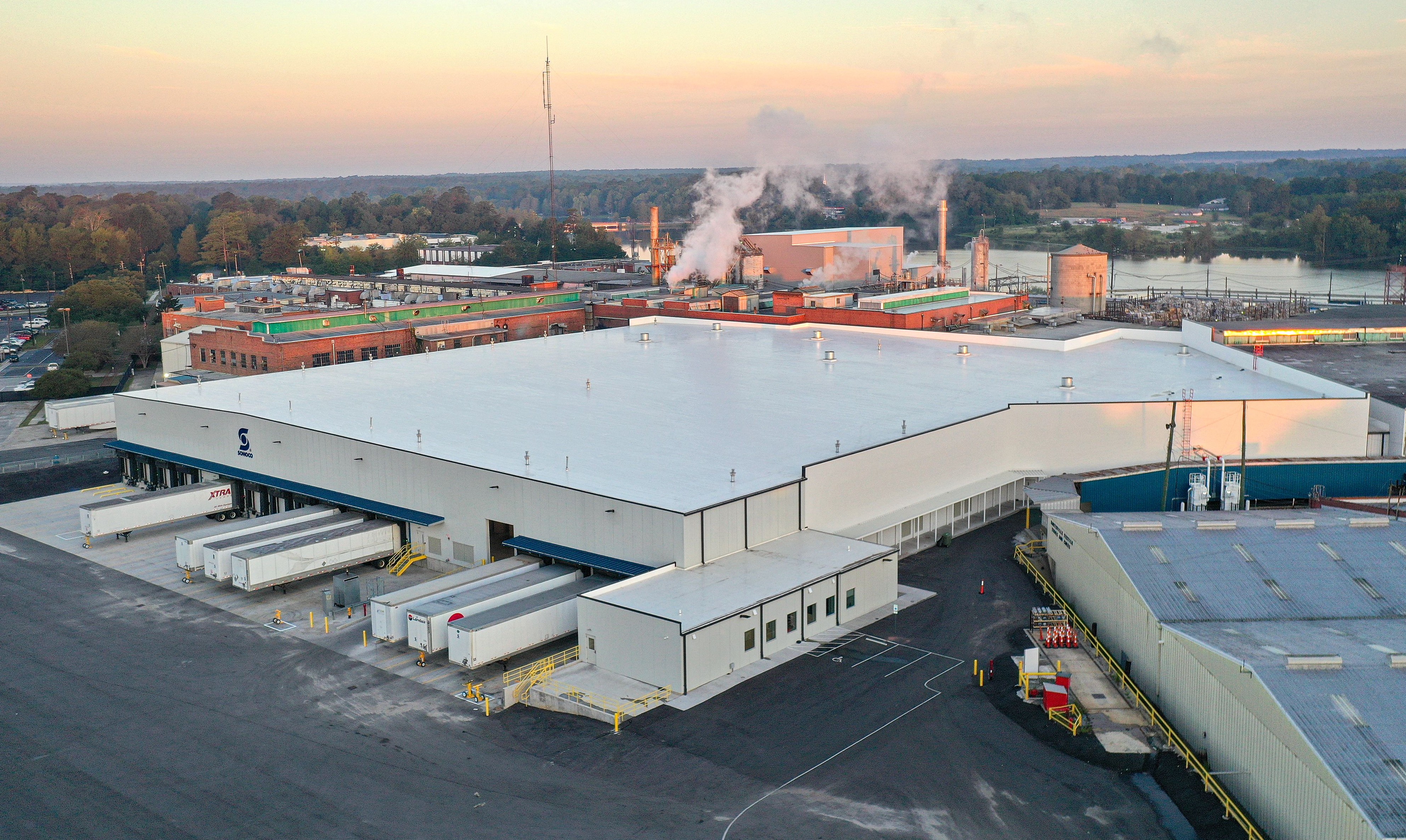
Clients are always looking to make their processes more efficient—saving time, money, and resources. As designers, our role is to support that goal by creating facilities that align with how work actually happens. Sonoco Products Company, a leading producer of diversified consumer packaging, sought to modernize its facility in Hartsville, South Carolina, to boost efficiency and improve finished-goods handling. The challenge was a campus spread across multiple buildings, each housing different phases of the manufacturing process.
The solution was consolidation. By demolishing several structures and connecting two existing buildings—one 70 years old and the other 100—we created a single, streamlined facility. Supporting site improvements included a one-way truck traffic pattern that enhanced safety and flow. Together, these changes significantly improved operations and are estimated to save the company $30 million annually in operational costs.
Design for the Future
As smart designers, we create facilities that bring economic prosperity to clients and their communities. We consider every interaction from the people within the facility, to those in the community it supports, showcasing design that encourages accessibility, safety, and innovation. We provide clients with solutions that enhance their operations, empower their employees, and positively impact local communities.
Contact us to learn more.


More Posts