
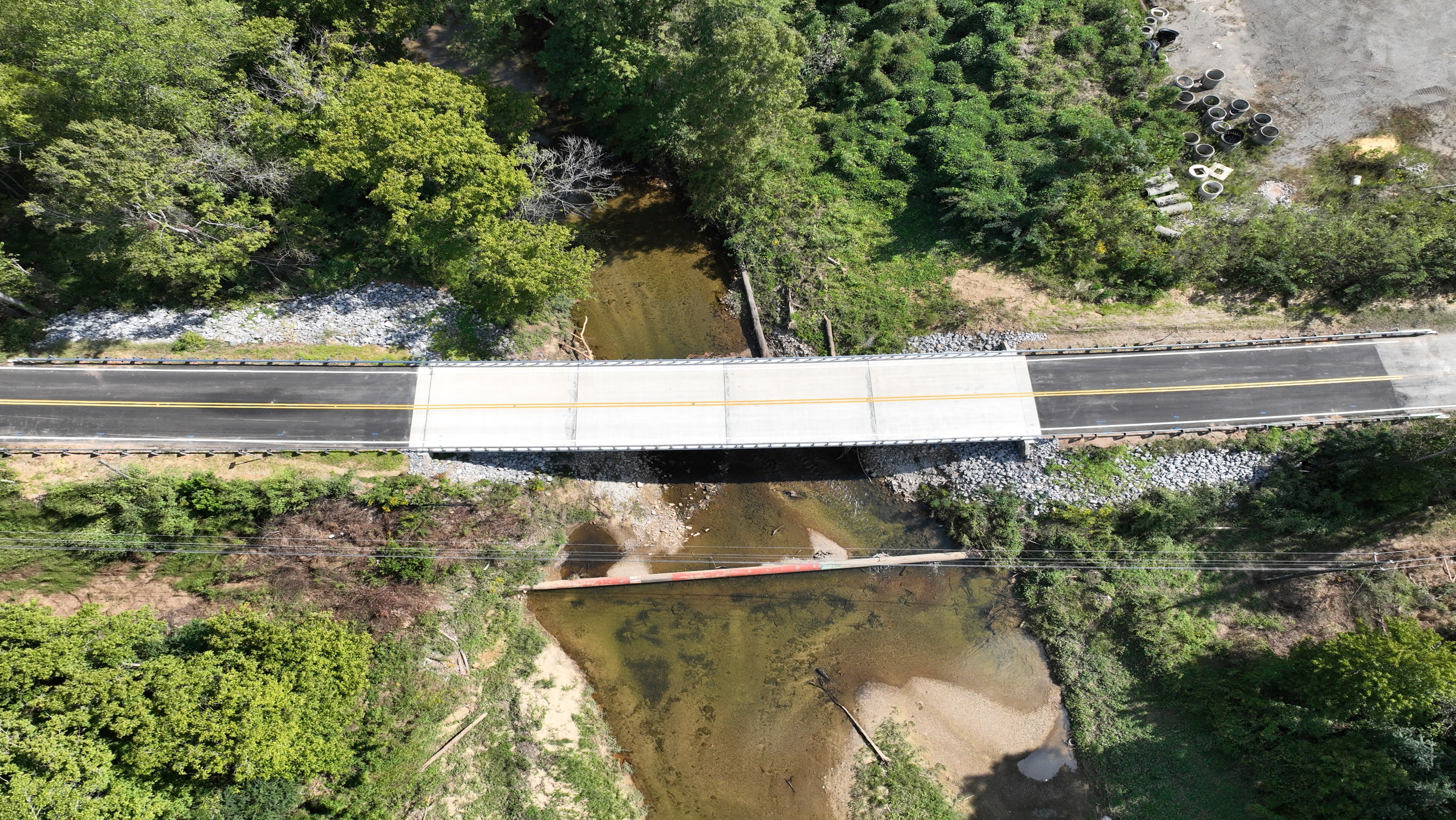
A single bridge closure can add miles to a daily commute. Multiply those days by weeks, and you’ve got freight delays, community disruptions, and safety concerns. Municipalities face increasing pressure to replace, repair, and rehabilitate bridges faster than ever before—without compromising safety. That’s easier said than done.
The good news is we live in a time of constant innovation. New technology and smarter methods are helping bridge design teams expedite projects without sacrificing quality. Here are five bridge design innovations worth watching.
1. AI and Drone Technology Speed Up Bridge Inspections
Bridge inspections no longer require inspectors to rely solely on lifts or lane closures for hard-to-reach locations. Drones equipped with high-resolution cameras can quickly grab detailed images of bridge components. AI-powered software identifies cracks, corrosion, concrete spalls, and other signs of deterioration on the spot. The result is faster inspections, improved safety, and better information for decision-making.
2. Digital Twins Identify Issues for Early Solutions
Engineers use LiDAR, 3D laser scanning, and other advanced surveying technologies to create highly accurate digital models, known as digital twins, of bridge structures. Using these living models, project teams evaluate existing conditions, test repair options, monitor structural performance, and plan maintenance before construction begins. By identifying potential issues early, digital twins reduce surprises in the field. Crew coordination remains steady, and projects stay on schedule.
3. Accelerated Bridge Construction Limits Road Closures
Accelerated Bridge Construction (ABC) continues to transform bridge delivery. Instead of building everything onsite, major bridge components are fabricated offsite and installed during short-term closures. This approach significantly reduces construction time, minimizes traffic disruptions, and improves safety for motorists and construction crews. For many high-traffic corridors, ABC has fast become the preferred delivery method.
4. Ultra-High-Performance Concrete Supports ABC Methods
Ultra-high-performance concrete (UHPC) works overtime to support bridge construction and rehabilitation. When used in ABC methods, it creates durable closure pours between prefabricated bridge elements, making assembly more efficient and reducing impacts on motorists. For aging bridges, UHPC serves as a high-strength structural overlay that restores deteriorated decks, extends the bridge's lifespan, and limits lane closures. This leads to traffic resuming with minimal disruption.
5. Temporary Bridge Systems Keep Traffic Moving
Sometimes the fastest way to replace a bridge is to build another one first. Prefabricated temporary bridge systems, such as rentable Acrow bridges, provide safe detours while permanent structures are under construction. Assembled quickly and reused on future projects, these modular systems help agencies maintain traffic flow and reduce delays. It can also boost the bottom line by providing greater control over project costs.
When bridge projects move faster, everyone benefits. Communities have fewer traffic delays. Workers operate in safer environments. And owners gain infrastructure built to handle the long term. To learn more about bridge design innovations, contact us.
FAQ
What are the latest bridge design innovations?
Modern bridge design innovations include AI-powered inspections, drone technology, digital twins, Accelerated Bridge Construction (ABC), LiDAR surveying, and prefabricated bridge systems that help shorten project schedules and improve safety.
How does AI improve bridge inspections?
AI analyzes images collected by drones or cameras to identify cracks, corrosion, concrete deterioration, and other structural issues faster than traditional inspections.
What is a digital twin in bridge engineering?
A digital twin is a detailed virtual model of a bridge created using technologies like LiDAR and 3D laser scanning. Engineers use it to evaluate existing conditions, test repairs, monitor performance, and plan maintenance.
What is Accelerated Bridge Construction?
Accelerated Bridge Construction (ABC) is a construction method that uses prefabricated bridge components installed during short road closures, reducing traffic disruptions and improving safety.
Why are drones used for bridge inspections?
Drones safely collect high-resolution images of difficult-to-access bridge components, reducing lane closures while improving inspection quality and efficiency.
How do temporary bridge systems reduce traffic disruptions?
Temporary bridges maintain traffic flow while permanent structures are replaced or rehabilitated, helping communities avoid lengthy detours.
Why is innovation important in bridge engineering?
Innovation helps engineers deliver safer, more durable bridges while reducing construction time, minimizing traffic disruptions, lowering costs, and improving project planning.


More Posts
5 Bridge Design Innovations for Faster and Safer Construction

The Latest FDOT Trends and Regulations Guiding Developments
